
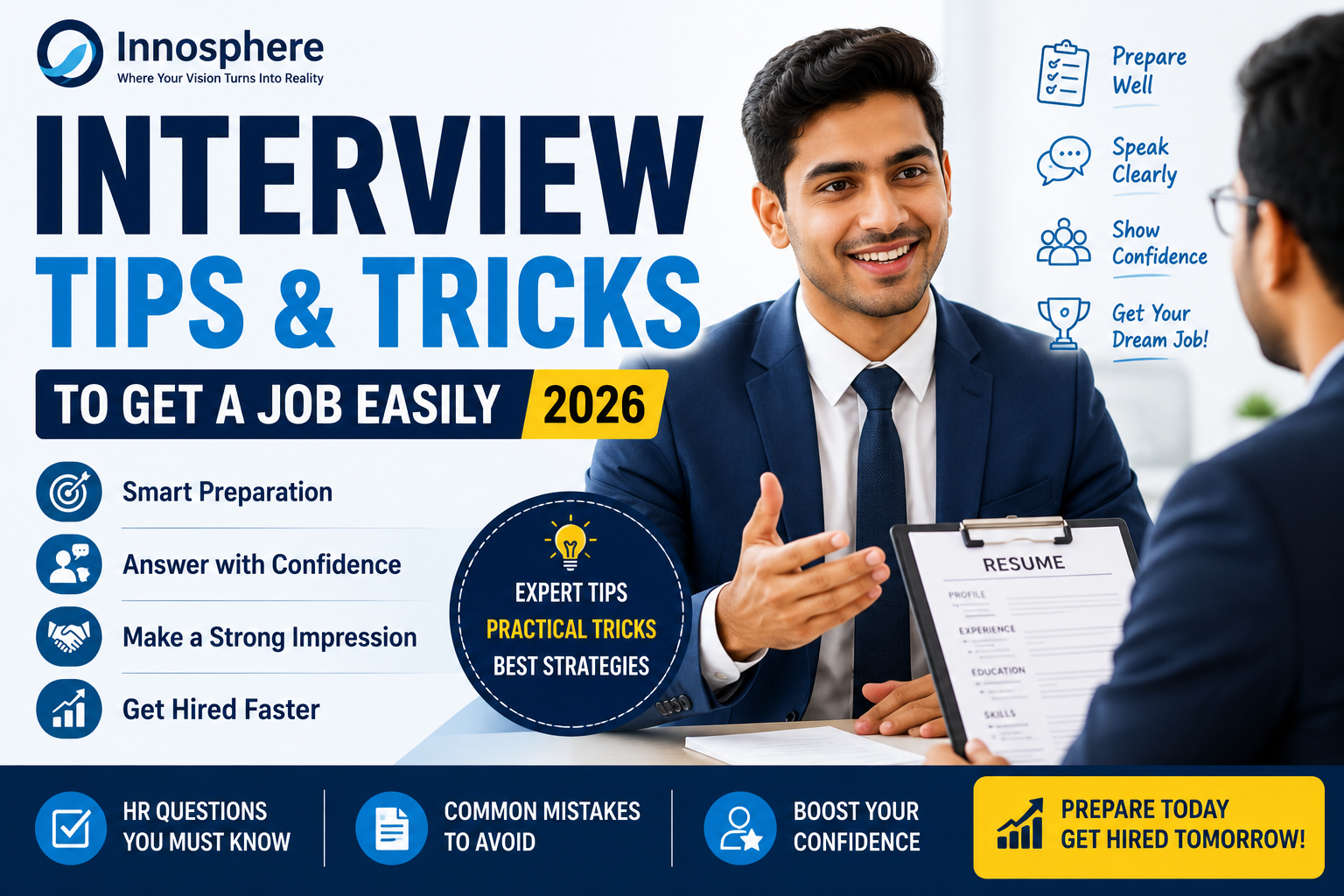
Interview Tips and Tricks to Get a Job Easily (2026 Guide)
Getting an interview call is the first step toward your dream job, but succeeding in the interview requires preparation, confidence, and the right strategy. Every year, millions of candidates attend interviews, yet only a small percentage receive job offers. The difference is often not intelligence—it is preparation.
Whether you are a student, fresher, or experienced professional, this guide will help you understand the best interview tips and practical tricks that can improve your confidence and increase your chances of getting hired.
Why Interview Preparation Matters
Employers don't just evaluate your technical knowledge. They also assess your communication skills, attitude, confidence, problem-solving ability, and whether you are the right fit for the organization.
Good preparation helps you:
- Reduce interview anxiety.
- Answer questions confidently.
- Create a strong first impression.
- Demonstrate professionalism.
- Increase your chances of receiving a job offer.
Top 20 Interview Tips & Tricks
1. Research the Company
Before attending an interview, spend time learning about the company's history, products, services, mission, values, recent achievements, and competitors.
2. Understand the Job Description
Read the job description carefully and understand the responsibilities, required skills, and qualifications. Prepare examples from your own experience that match the role.
3. Build a Professional Resume
Your resume should be clear, ATS-friendly, and updated with your latest skills, achievements, certifications, and projects.
4. Practice Your Self-Introduction
Prepare a confident introduction that includes:
- Your name
- Educational background
- Work experience (if applicable)
- Key skills
- Career goals
5. Practice Common HR Questions
- Tell me about yourself.
- Why should we hire you?
- What are your strengths?
- What are your weaknesses?
- Why do you want to join our company?
- Where do you see yourself in five years?
6. Prepare Technical Questions
Review concepts related to your field and practice solving practical problems that may come up during the interview.
7. Dress Professionally
Wear clean, formal, and comfortable attire. Your appearance contributes to the first impression you make.
8. Arrive Early
Reach the interview venue at least 15–20 minutes early. For online interviews, log in 10 minutes before the scheduled time.
9. Maintain Positive Body Language
- Smile naturally.
- Maintain eye contact.
- Sit confidently.
- Offer a firm handshake if appropriate.
- Avoid crossing your arms.
10. Listen Carefully
Do not interrupt the interviewer. Listen to the complete question before answering.
11. Give Structured Answers
Keep your responses clear, relevant, and concise. When discussing your experience, explain the situation, your actions, and the results.
12. Be Honest
If you don't know an answer, admit it honestly and explain how you would learn or approach the problem.
13. Highlight Your Achievements
Support your answers with real examples, measurable results, internships, projects, or certifications.
14. Keep Important Documents Ready
- Resume
- Educational Certificates
- Experience Letter
- Relieving Letter
- Salary Slips (if applicable)
- ID Proof
15. Prepare Questions for the Interviewer
Ask thoughtful questions about the role, team, learning opportunities, or company culture.
16. Avoid Negative Comments
Never speak negatively about your previous employer, manager, or colleagues.
17. Show Enthusiasm
Employers appreciate candidates who demonstrate genuine interest in the role and organization.
18. Follow Up Professionally
Send a polite thank-you email after the interview to express appreciation for the opportunity.
19. Learn from Every Interview
Even if you are not selected, identify what went well and what you can improve for future interviews.
20. Believe in Yourself
Confidence comes from preparation. Stay calm, be yourself, and remember that every interview is an opportunity to learn and grow.
Common Interview Mistakes
- Arriving late.
- Not researching the company.
- Poor communication.
- Using an outdated resume.
- Providing unclear answers.
- Overconfidence or lack of confidence.
- Not asking any questions.
- Ignoring body language.
Interview Day Checklist
| Task | Status |
|---|---|
| Resume Updated | ? |
| Company Research Completed | ? |
| Documents Ready | ? |
| Formal Dress Prepared | ? |
| Interview Location Verified | ? |
| Mock Interview Practiced | ? |
| Positive Mindset | ? |
Frequently Asked Questions
Can freshers get a job without experience?
Yes. Employers often hire freshers based on their communication skills, projects, internships, willingness to learn, and overall attitude.
How long should interview answers be?
Answer clearly and directly. Most responses should take between 30 seconds and 2 minutes, depending on the question.
What is the biggest interview mistake?
Attending an interview without preparation is one of the most common reasons candidates are unsuccessful.
How Innosphere Helps Job Seekers
Innosphere provides free career tools and practical resources to help students, freshers, and professionals prepare for successful careers.
- Free Resume Builder
- ATS Resume Checker
- HR Interview Questions
- Interview Preparation Checklist
- Self Introduction Guide
- Career Objective Examples
- Communication Skills Guide
- HR Document Formats
Conclusion
There is no shortcut to getting a job, but smart preparation can significantly improve your chances of success. Focus on building your skills, preparing thoroughly, communicating confidently, and learning from every interview experience.
Remember, every interview is a stepping stone toward your dream career. Stay positive, keep improving, and never stop learning.